Satellite Services
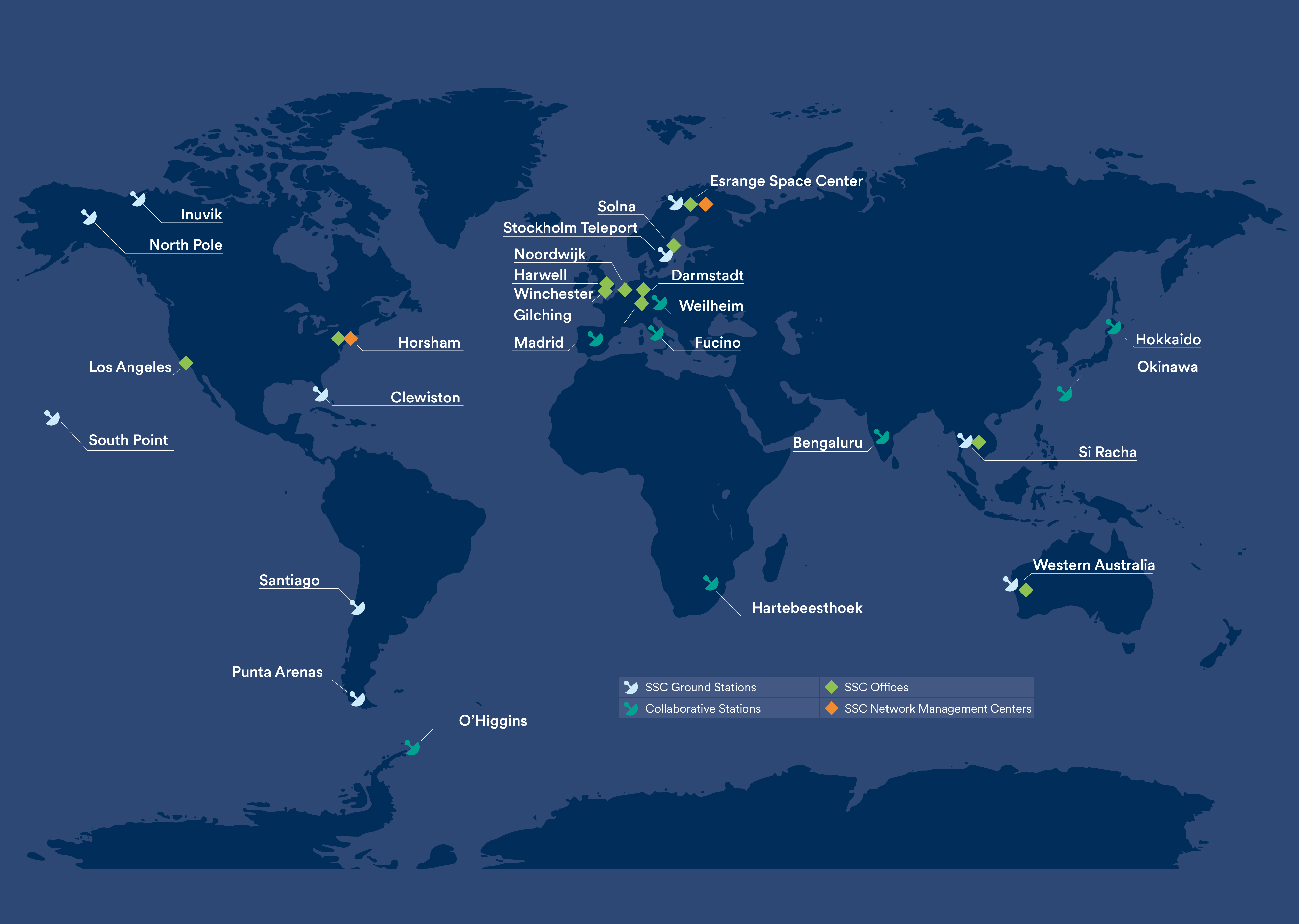
SSC has provided satellite operations services for over 50 years. Our global network of satellite stations, serves many customers worldwide and has access to satellites in most orbits. Our wide range of services includes data reception and processing, routine operations, telemetry, tracking and command services as well as support during satellite launches.

Please go to the menu to learn more about our stations and what satellites are used for.
Research In Space
Some scientific research can only be performed in space, like observations of the atmosphere and phenomena in the Universe.

In space, it is also possible to study processes without the influence of gravity. By sending experiments to space, gravity is eliminated and scientists can retrieve data which they would never get on Earth.

SSC gives scientists access to space on its sounding rockets and stratospheric balloons. Navigate this screen to see how.
Spacecraft Operations and Engineering Services
Our companies LSE Space and Aurora have operations in Germany, the Netherlands and Spain, close to or integrated with their customers, the European Space Agency (ESA) and the German Space Agency (DLR). SSC also operates ESA's Salmijärvi satellite station near Kiruna.

For 25 years, we have been providing long-term engineering teams to ESA and DLR to support preparations and operation of satellite missions and other spacecraft like the International Space Station.

Over the years we supported numerous succesful programs. Go to Projects for some examples.
ESRANGE SPACE CENTER
Europe's largest civilian space center

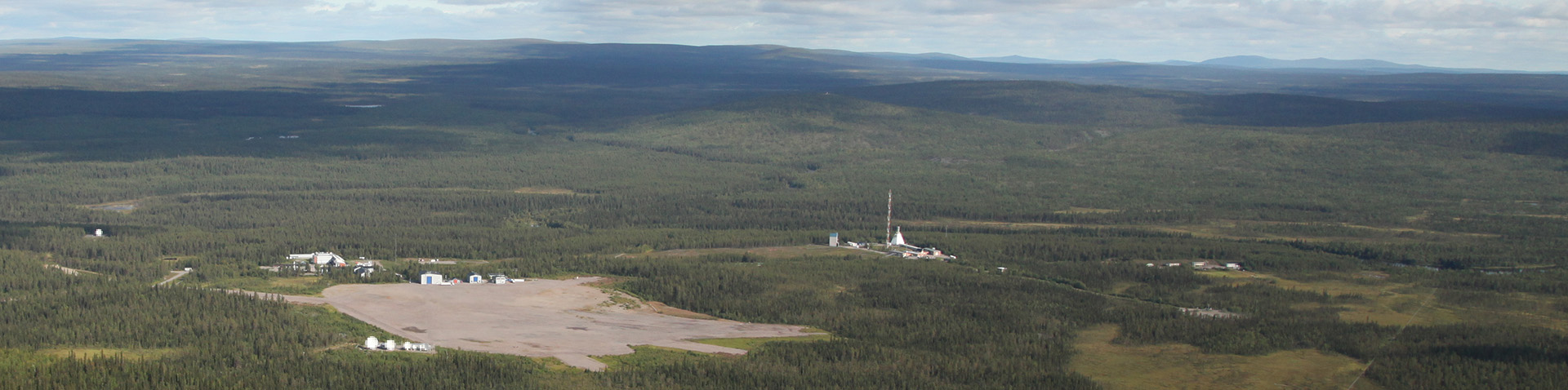
Esrange is located in the very north of Sweden, above the Arctic Circle (68°N, 21°E) and has access to a vast, unpopulated impact and recovery area.

The facility has been operational since 1966 and is presently used by the international scientific community for launching sounding rockets for microgravity and atmospheric research as well as high altitude balloons for astronomy, atmospheric research and drop tests of space and aerial vehicles.

Esrange also accommodates one of the world's largest civilian satellite ground stations and acts as a hub in our satellite station network, SSC Space Network.
The most powerful sounding rocket launched
from Europe
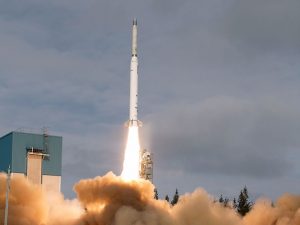
MAXUS 9 was launched under ESA contract from Esrange April 7, 2017.

The twelve tons heavy vehicle brought 4 valuable scientific experiments to an apogee of 678 km. The flight provided 12 minutes of microgravity conditions to the experiments before atmospheric re-entry occured.

The disciplines ranged from material science and plant biology to combustion experiment, the latter paving the way for potential new energy sources. MAXUS 9 was also used as test facility for a small drop body that was released from the vehicle in order to conduct a supersonic parachute free flight test over the Esrange impact area.
Recovery system
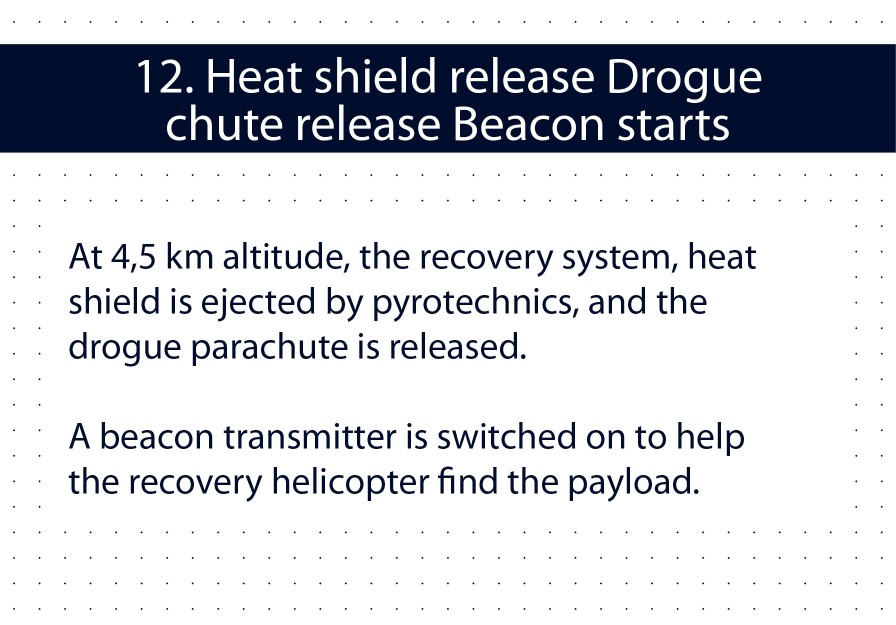
Parachutes: Drogue parachute and main parachute, released at approximately 5 km. Beacon transmitter.
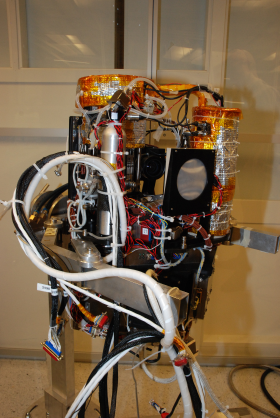
XRMON
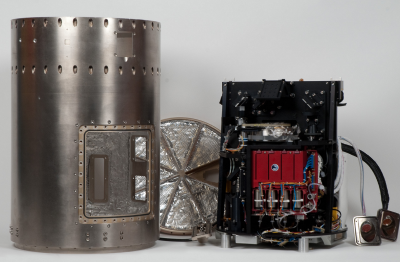
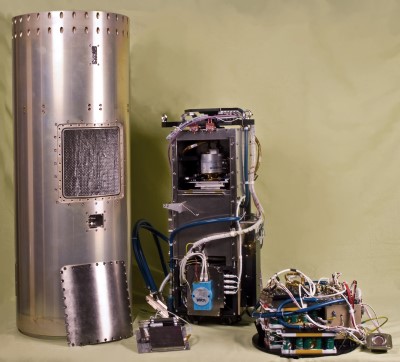
In situ X-ray radiography experiments on metallurgical processes in microgravity environment. Using a furnace heated to 700 °C, an aluminium-copper alloy was studied with X-ray radiography. (Université Paul. Cézanne Aix-Marseille III, France).
BIM-2
Two blood cell experiments:

MicImmun: Microgravity in adaptive immunity.
Influence of microgravity on the activation of NF-kB protein (Erasmus Medical Centre, the Netherlands).

STIM: Signal transduction in primary human T lymphocytes in altered gravity
(Zero-g LifeTec GmbH, Switzerland, University of Sassari).
The module is modified modification for plant cell experiments (MASER 13).
Payload
Forward part of separation interface.
Second Rocket Stage
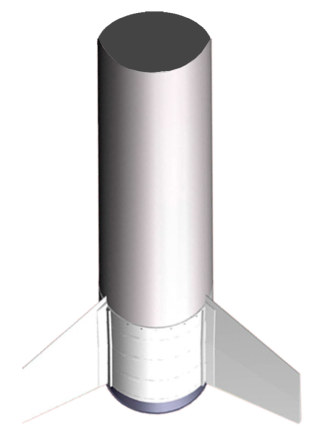
MASER uses a two-stage solid propellant rocket, VSB 30.
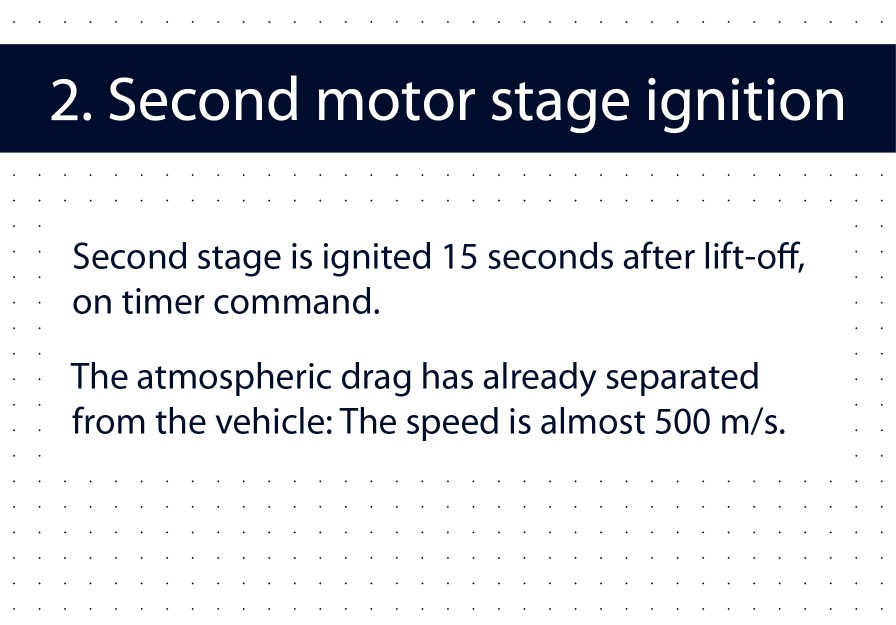
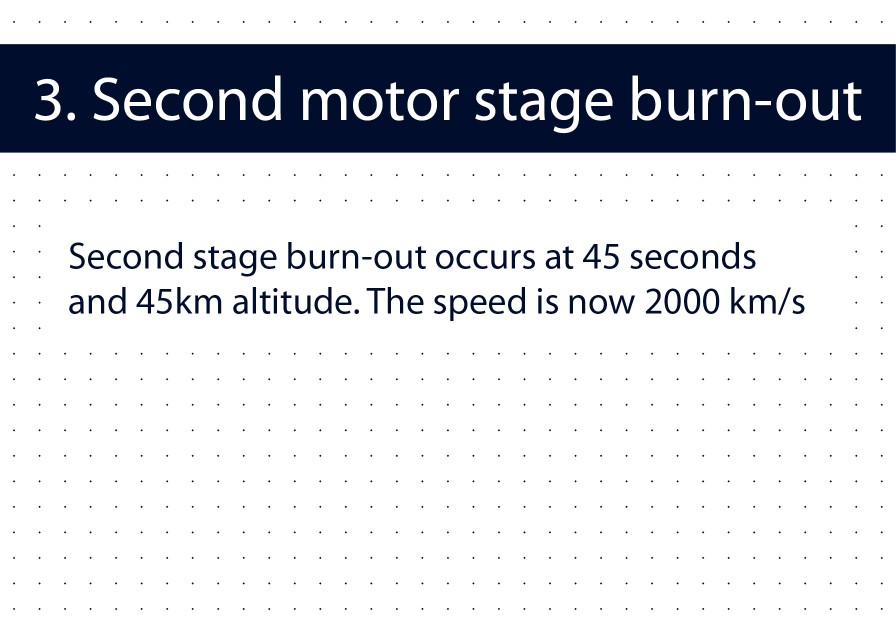
The second rocket stage ignites 15 seconds after take-off and burns out at 45 seconds after take-off.
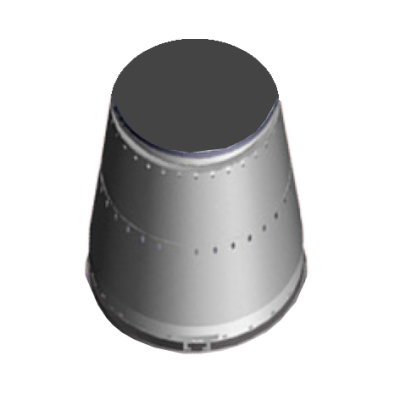
Nose Cone
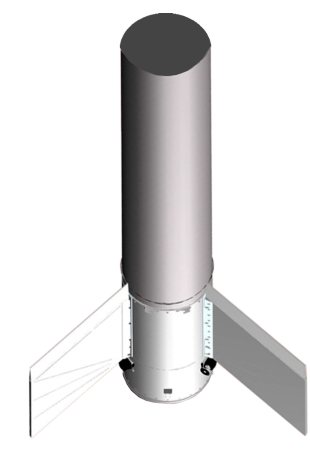
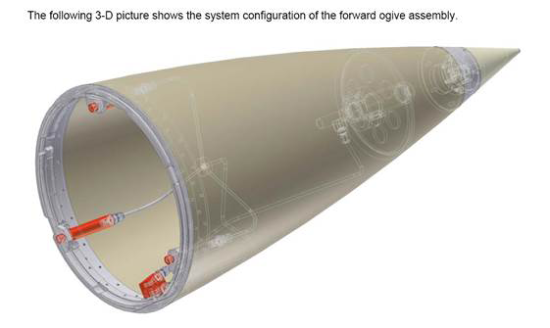
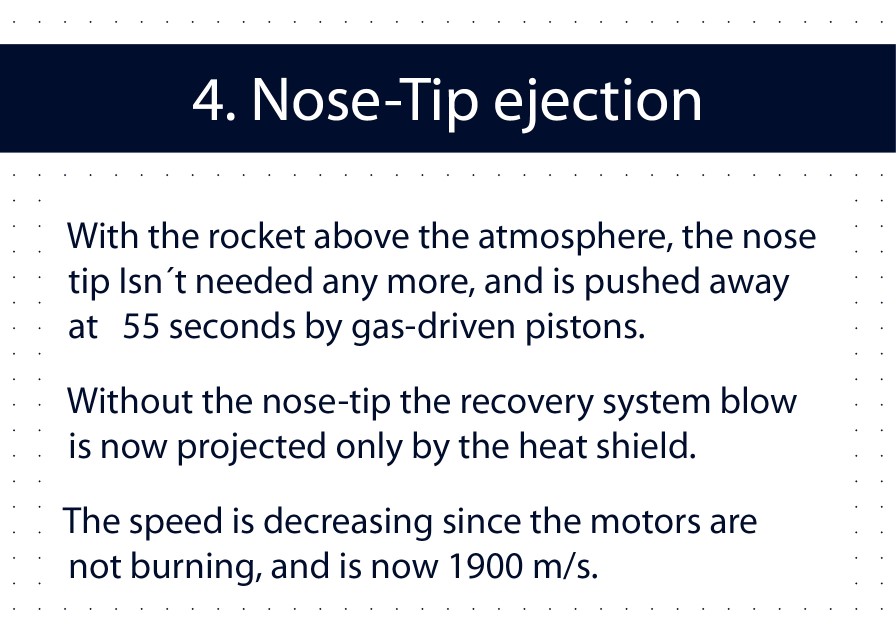
Minimizes aerodynamic resistance. Covered with heat protective layer.
Biomics 2
Study of the three-dimensional movements of blood vesicles (lipids) in liquid under shear flow (Université J. Fourier, France).
SOURCE
Convective boiling and condensation: local analysis and modelling of dynamics and transfers Experiment focused on fluid behaviour in rocket propellant tanks (Dr C Colin, Dr P Behruzi, Dr J Lacapere, Dr M Dreyer).
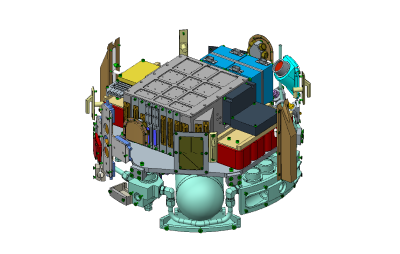
Maser Service Module
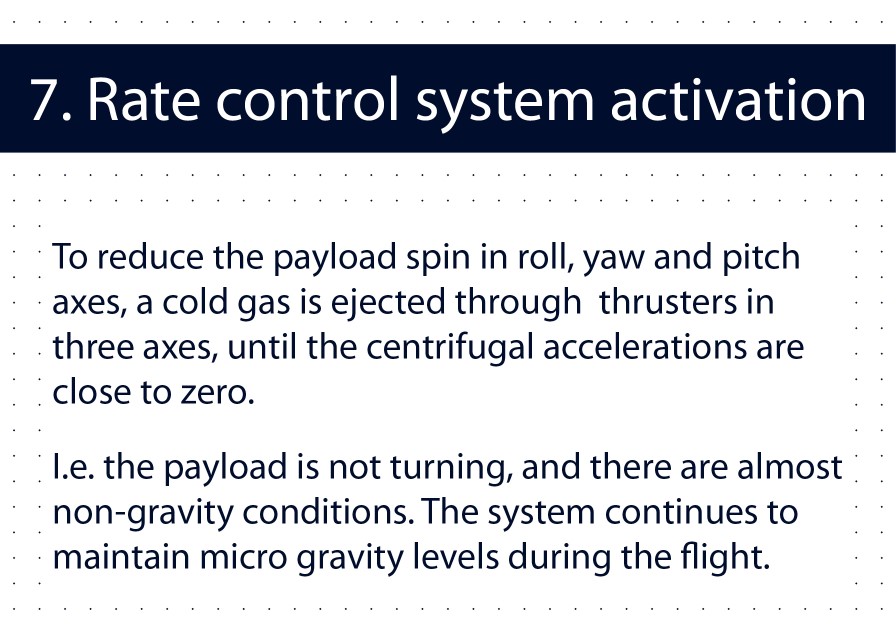
Handles all data communication to/from ground and maintains microgravity condition.
High speed telemetry system (with 4 x 5 Mbit/s bandwidth) for transmission of data and video images in real time. Rate control system to reduce payload movements and maintain microgravity conditions.
Motor Adapter
Aft part of separation interface.
First Rocket Stage
MASER uses a two-stage solid propellant rocket, VSB 30.
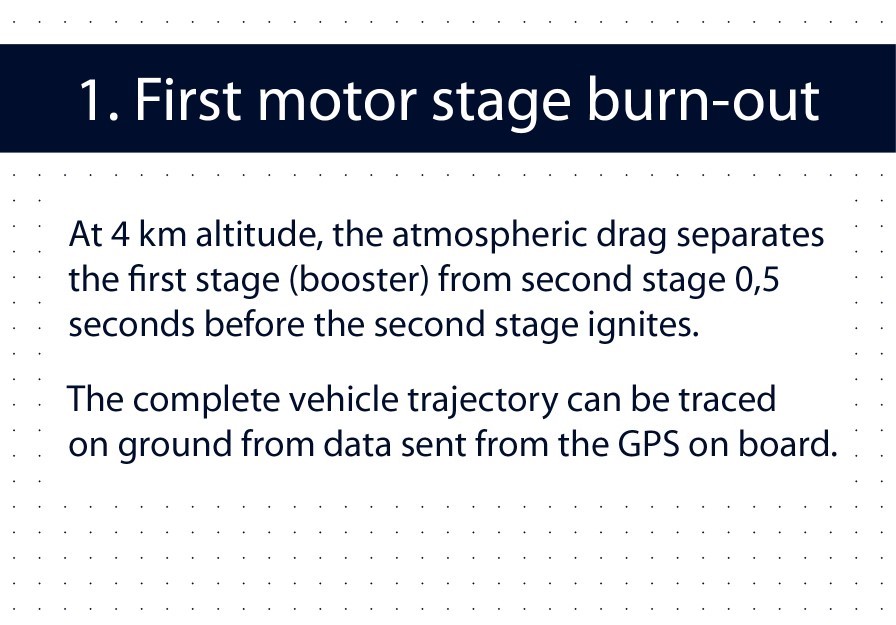
The first rocket stage (the booster) provides the thrust for take-off and burns out 14,4 seconds after take-off.
LAUNCH
ROCKET
Balloon Launch
SSC's complete range of balloon services includes payload design and manufacturing, service systems, balloon systems, launch services, flight operations and recovery.

We offer complete missions of atmospheric research, astronomy or any other scientific missions as well as technical tests of re-entry capsules and unmanned vehicles.

Test & Validation
Before sending anything to space, it is important to test and validate the mission feasibility. SSC offers a range of Test & Validation services to support the scientific and commercial space community in pushing the science and technology further for the benefit of human kind.

From planning new planetary exploration missions (E.g. tests of capsules, parachutes, rovers, habitats, probes, etc.) to trying new technologies and ways of working (E.g. Drop test of autonomous vehicles, demonstration of a "green" launch site with no hydrazine used, test of reusable rockets, etc.).

Esrange Space Center has a lot to offer: a restricted airspace, a large land impact area over an uninhabited zone and the experience and infrastructure of being Europe's premier spaceport.

Satellite Launch
SSC intends to have a dedicated low-cost launch capability at Esrange Space Center to support the global expected growth of small satellites.

The satellites would be placed in a Sun-Synchronous Polar Low-Earth orbit. The goal is to launch the first satellite in 2022 with up to 4 launches per year.
SSC wishes to develop an environmental-friendly launch site with no hydrazine used.
The Rocket Launch Area lies 1 km from the Main Building. Located here are four permanent launchers from where sounding rocket launches are conducted. There are also preparation halls for rocket motors and payloads.
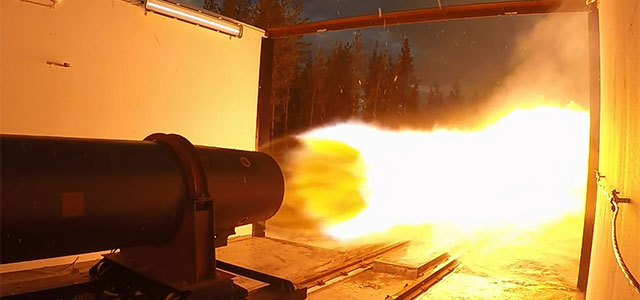
Test firing facility for solid motors (horizontally).
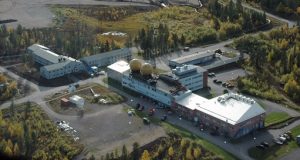
The main building at Esrange hosts technical facilities (e.g. Operations Centre, Safety Centre, TM Centre), as well as offices, meeting rooms and other social areas. The restaurant is located here, next to the reception. Hotel Aurora with 80 rooms is situated across the main road.
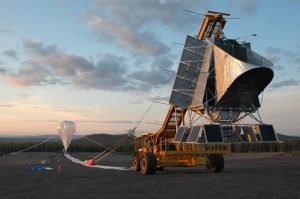
The Balloon Launch Area covers 800 x 600 meters and includes several buildings for preparing and handling the payloads to be flown. The big, open space is needed for the launch, where the balloon inflation and release are the critical events.
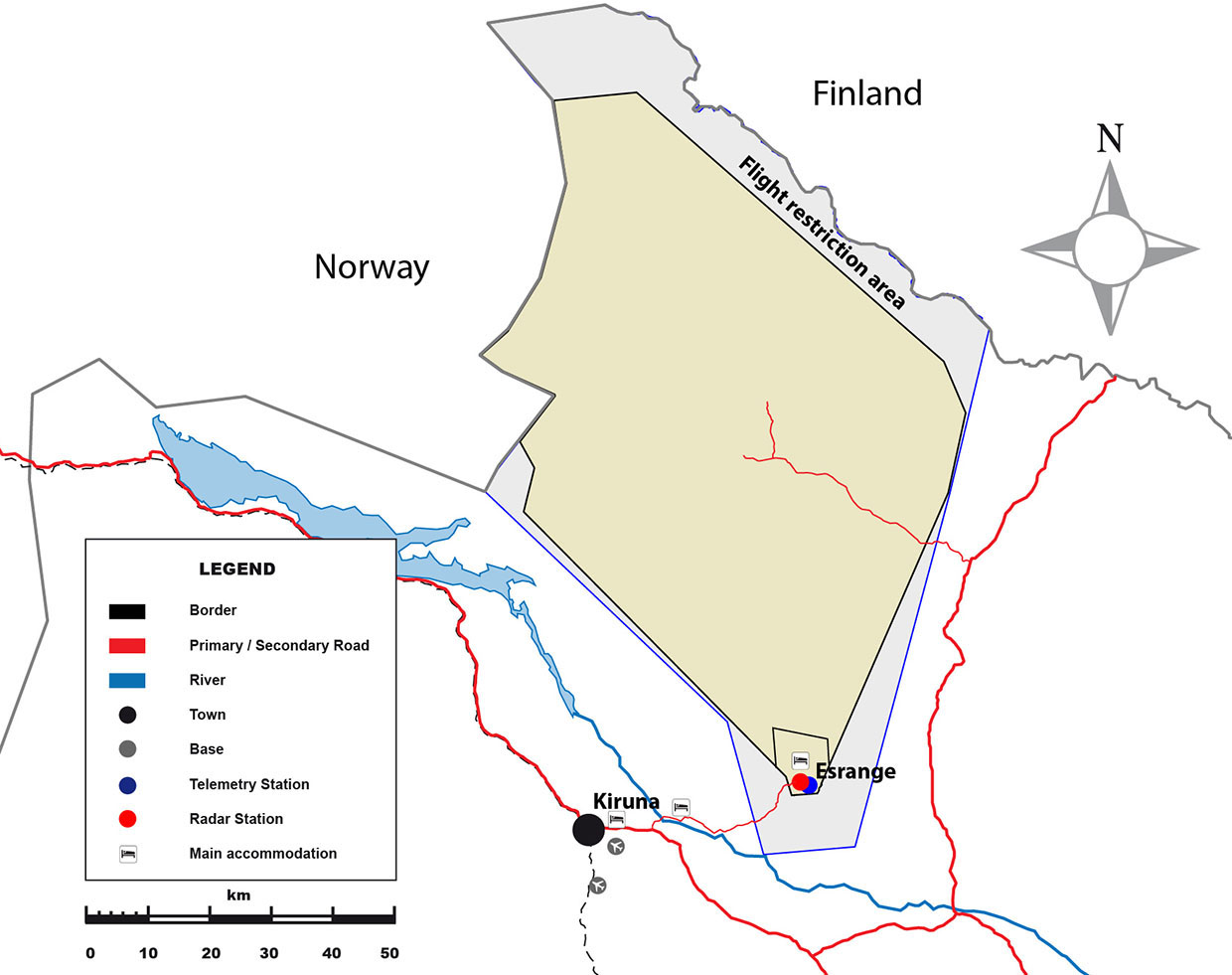
Esrange Impact Area is a 120 km long and 75 km wide, 5 200 sq. km large diamond-shaped area north of Esrange.
The area is uninhabited and is where rocket motors and other free-falling objects (e.g. drop bodies from rockets and balloons) can impact.
Surrounding the ground area is a restricted air-zone 6 600 sq. km in size, where autonomous systems such as UAS or drones can be flown.
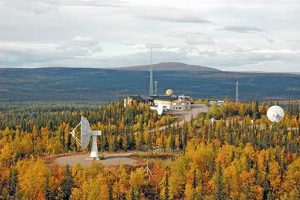
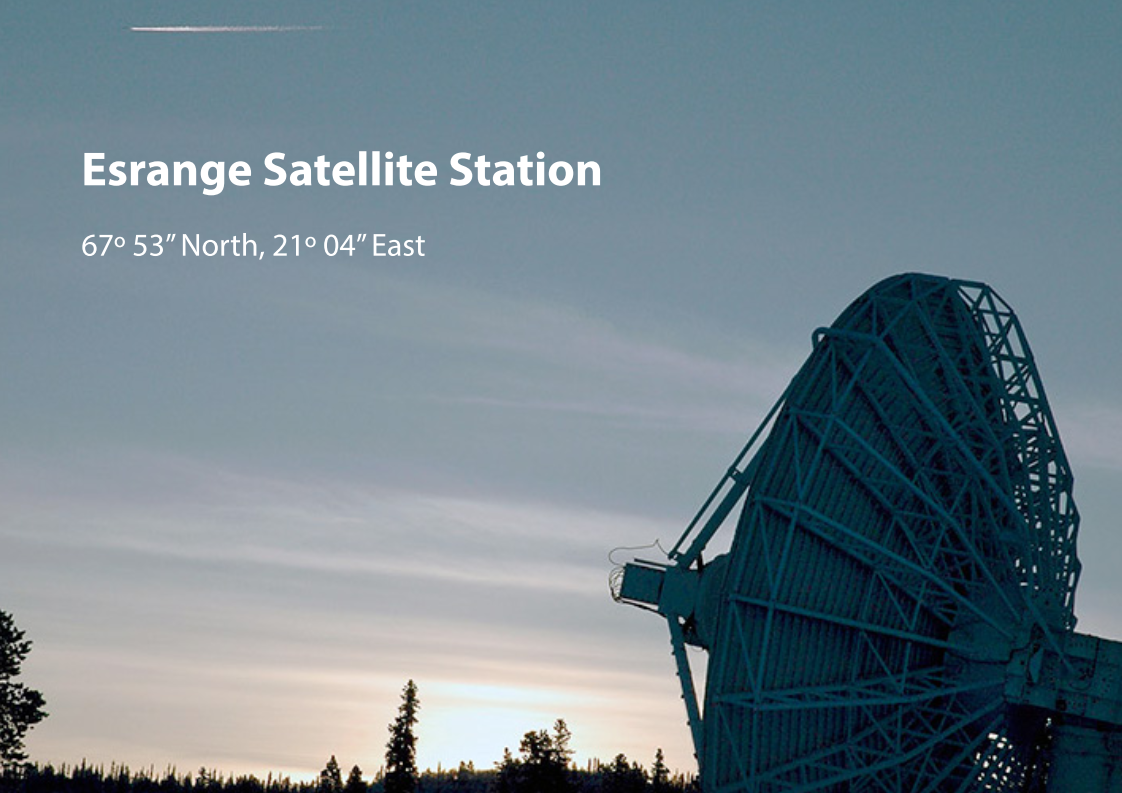
Located on a nearby hill is Esrange Satellite Station. Large portions of the satellite communications at Esrange are controlled from here.
More than 20 large antennas surround the station. These are mainly used for receiving data from satellites passing the coverage zone of Esrange. Several of the antennas are hosted, i.e. owned by other organizations but maintained by SSC.
ESRANGE SPACE CENTER
Europe's largest civilian space center

Esrange is located in the very north of Sweden, above the Arctic Circle
(68°N, 21°E) and has access to a vast unpopulated impact and recovery
area.

The facility has been operational since 1966 and is presently used by
the international scientific community for launching sounding rockets
for microgravity and atmospheric research as well as high altitude
balloons for astronomy, atmospheric research and drop tests of space
and aerial vehicles.

Esrange also accommodates one of the world's largest civilian satellite
ground stations and acts as a hub in our satellite station network, SSC
Space Network.
Ground Instruments
LIDAR is a remote sensing technology that measures distance by illuminating a target with a laser and analysing the reflected light. It is used for measuring aerosols, clouds and temperature profiles in the atmosphere layers.

The LIDAR instruments at ESRANGE are used for long term measurements, and as part of coordinated measurements with sounding rockets and stratospheric balloons. Real time data from ground based instruments are often used for final launch decisions.

The LIDAR is operated by the Department of Meteorology of Stockholm University.
APPLICATIONS
What satellites are used for.
Research on Balloons
With stratospheric balloons, scientists can fly instruments to study the atmosphere or telescopes to study phenomena in the universe. SSC launches numerous balloons from Esrange every year.

The balloons fly at around 40 km altitude for a few hours up to several days. The largest are double the size of the Globe Arena in Stockholm.

Several balloon programs run over many years and the scientific teams return to Esrange from year to year.

Examples of such projects are the BEXUS student program run jointly by SSC and German DLR, and the ones conducted by the French space agency CNES and NASA's balloon organization CSBF.
Research on suborbital rockets
Using high-altitude suborbital rockets, scientists can perform research in weightlessness (microgravity), atmospheric and plasma physics. Suborbital rockets can also be used for technology tests such as atmospheric re-entry tests or high velocity parachute tests.

SSC runs the SubOrbital Express rocket program from Esrange. We develop advanced experiment equipment, integrate the experiments and the rockets and provide launch services.

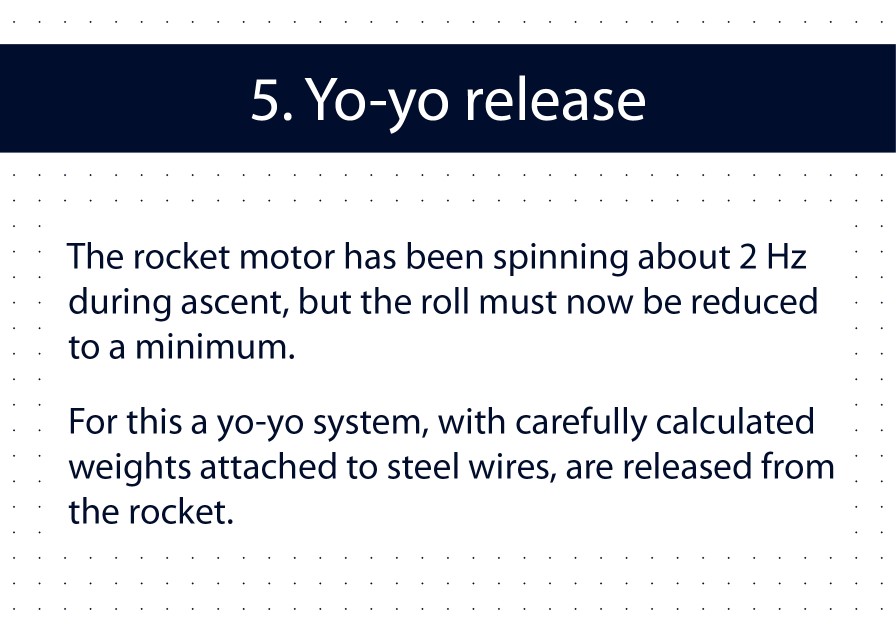
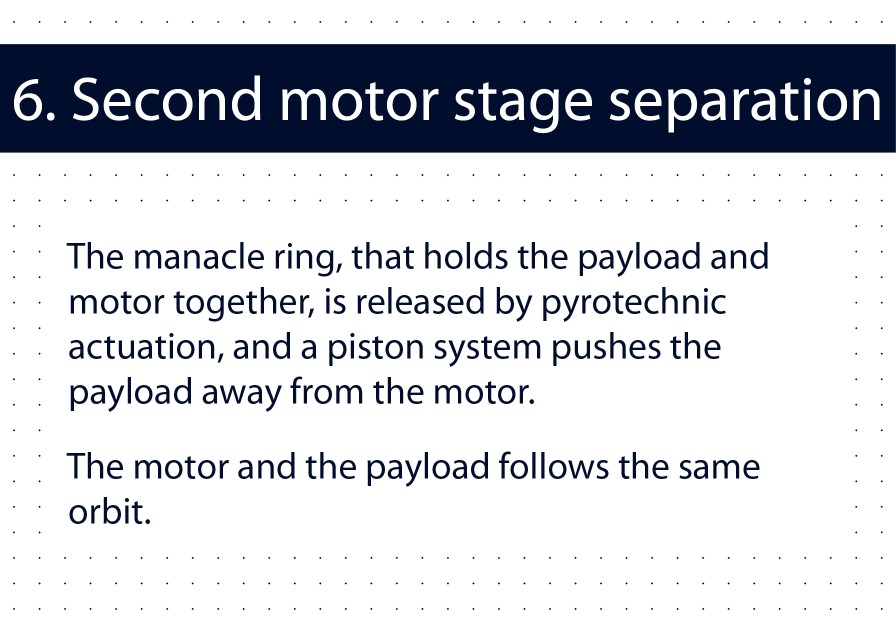
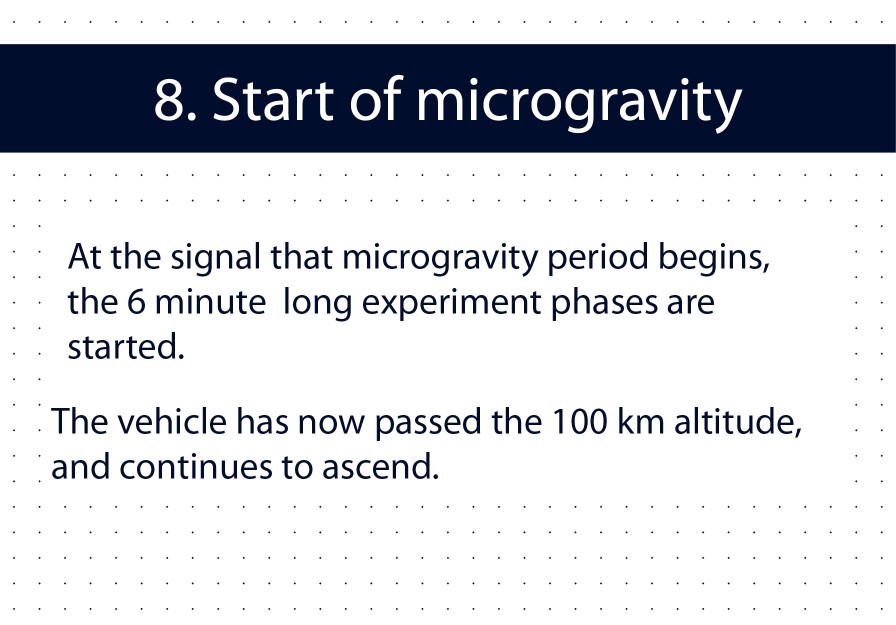
For a typical microgravity mission, SSC uses a two-stage rocket. The payload normally consists of 4-5 experiments and related service systems. The rocket reaches an altitude of around 260 km and provides 6-8 minutes of microgravity. The rocket is 12 meters high including payload and weighs around 2,5 tons.